
Iron Man AI Vs Real-Life AI: The Surprising Truth (2026)

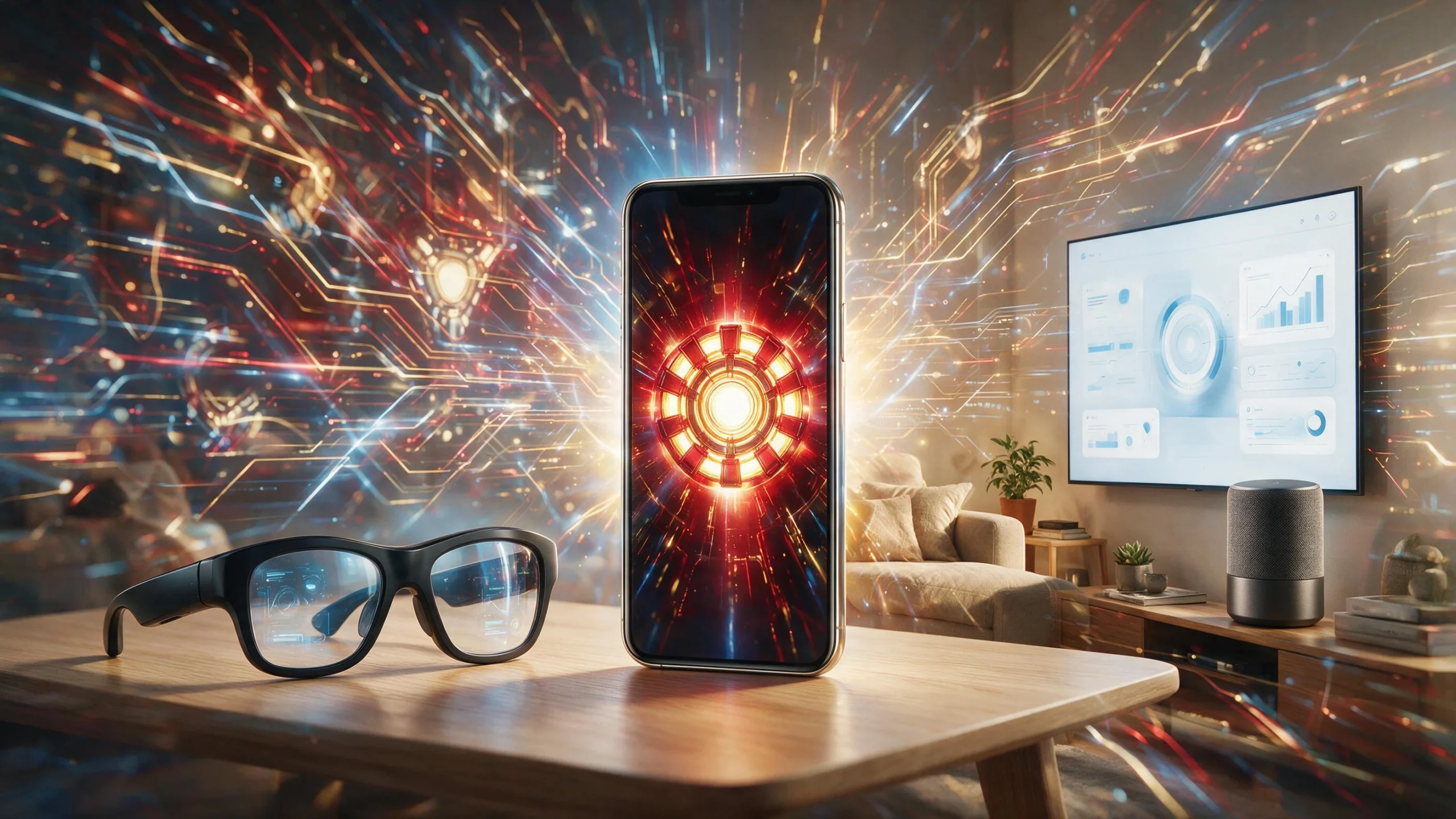
Quick Answer: Iron Man AI vs real life AI — how do they actually compare? JARVIS isn’t one piece of tech, it’s a stack of several. Real life AI has already caught up to some of it — natural conversation, voice control, smart home management. Other parts, like a fully autonomous AI that designs hardware and pilots a suit with zero oversight, are still years away. Below, we break JARVIS down piece by piece and match each one to real life AI you can actually use today.
Iron Man AI Vs Real Life AI: Why the Comparison Matters in 2026
Back in 2008, JARVIS felt like pure fantasy. A voice that could search the internet, run diagnostics, control a house, and crack a joke, all in the same breath. That was science fiction.
Fast forward to 2026, and most of it isn’t fiction anymore. You’re probably already carrying a piece of it in your pocket.
Here’s the pattern: language and reasoning closed the gap fastest. Autonomy closed it slowest. JARVIS makes independent decisions and takes physical action with almost no human check. That’s still the part Hollywood is way ahead on.
So let’s go capability by capability. How close is real life AI to JARVIS, really?
Latest Articles
- JBL EasySing Mic Mini Review 2026: Best Pocket Karaoke Mic? — 3 days ago
- What is the Best Portable Bluetooth Speaker in 2026? — 1 week ago
- Best Budget Wireless Earbuds in 2026: ANC, Sound and Value Picks — 2 weeks ago
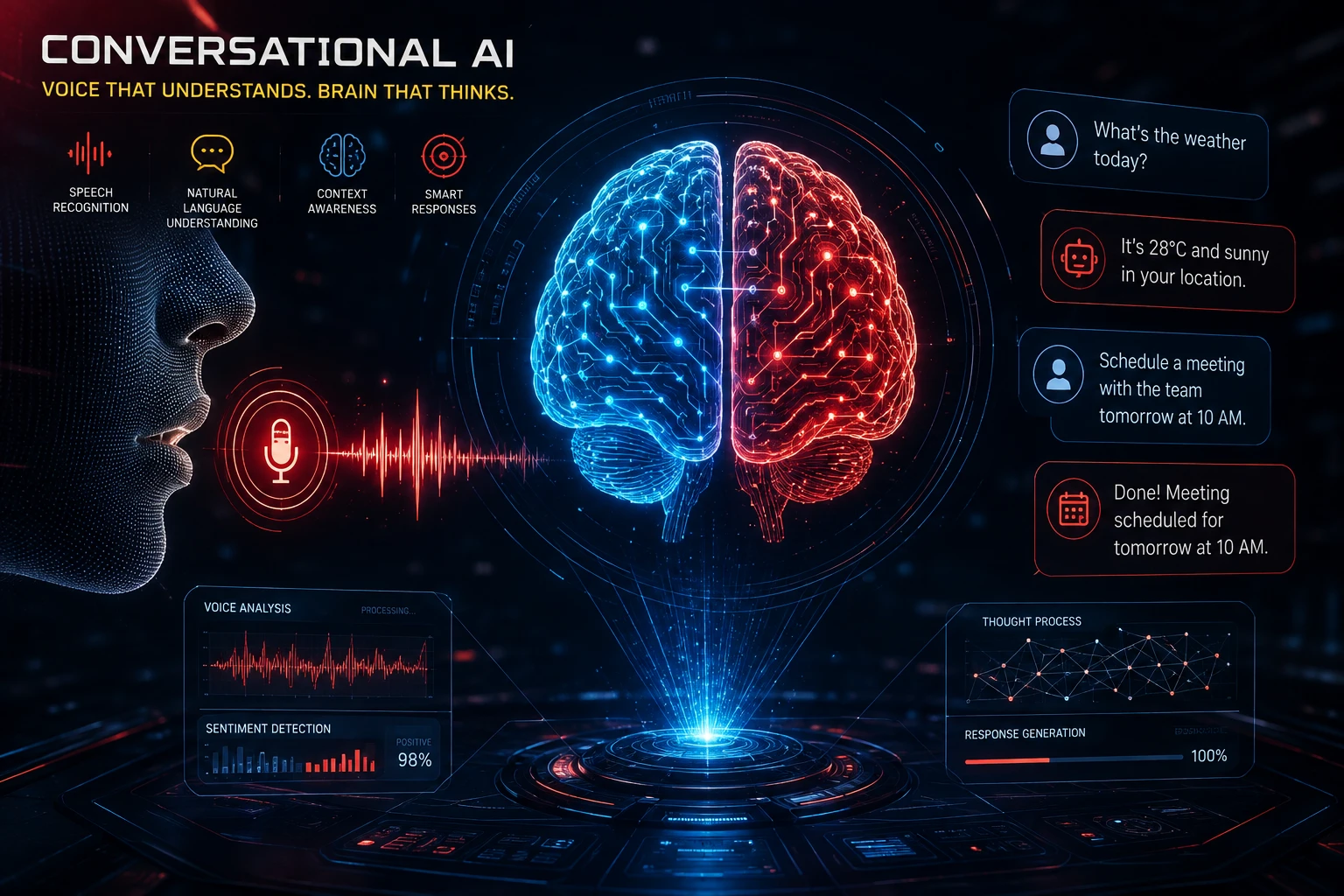
1. Conversational AI: JARVIS’s Voice and Brain
In the movies: JARVIS understands context, catches sarcasm, and handles complex requests like a person would.
In real life: This is where fiction and reality sit closest together. Large language model assistants hold multi-turn conversations, understand nuance, write code, and reason through multi-step problems. That’s the same core skill JARVIS shows off in nearly every scene.
The real difference comes down to integration. JARVIS is wired directly into Tony’s workshop, his suits, his entire company. Today’s AI assistants need you to open an app or connect them manually.
Closest real match: General-purpose AI assistants like Claude, ChatGPT, and Gemini. All free to use via app or web, with paid tiers if you want more. No buy link needed here — you just sign up.
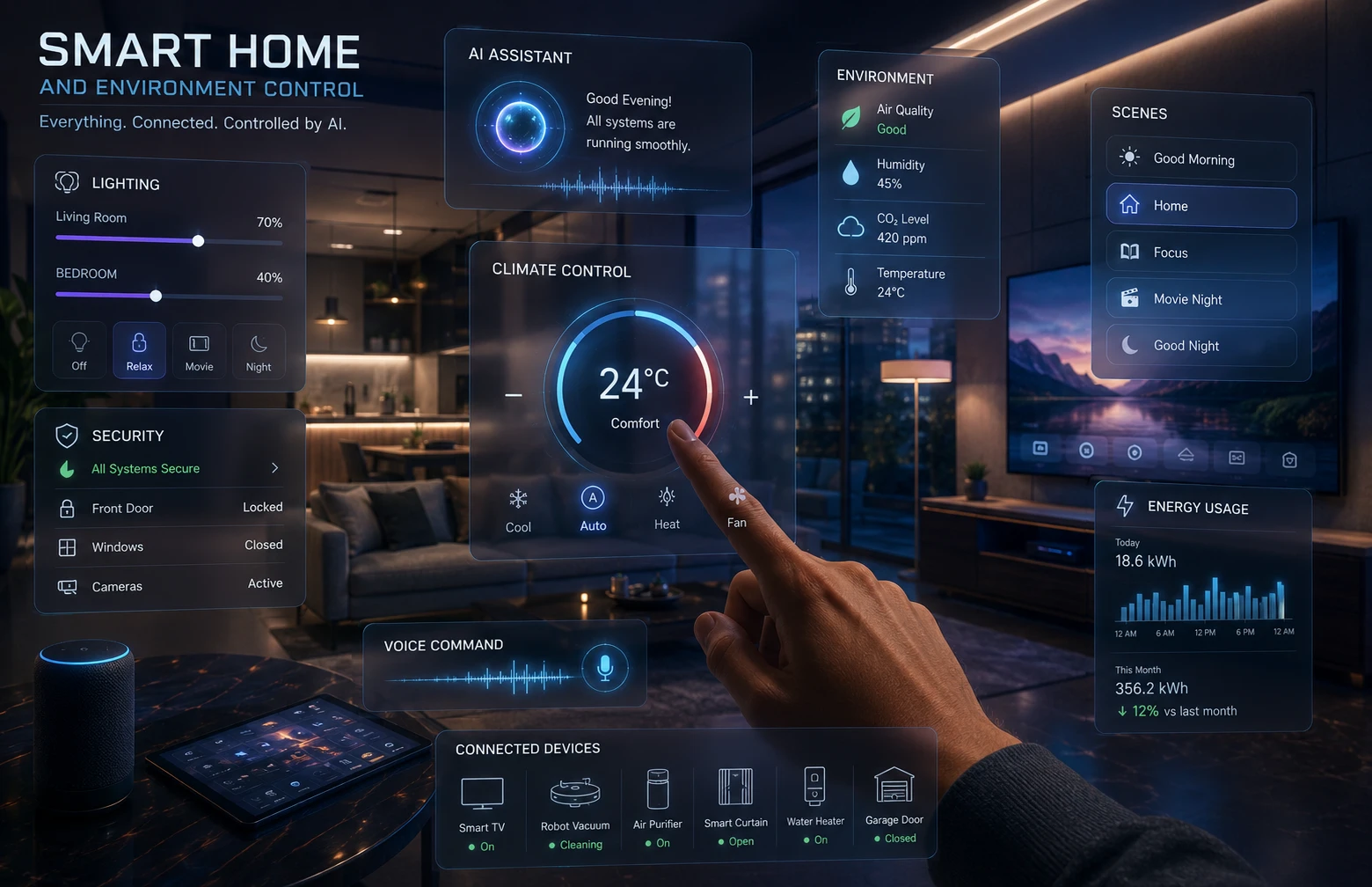
2. Smart Home and Environment Control
Round two of Iron Man AI vs real life AI: home automation.
In the movies: JARVIS dims the lights, manages security, and adjusts the workshop without being asked twice.
In real life: This one’s basically solved. Smart home ecosystems already let you control lighting, temperature, security cameras, and appliances by voice. Many of them now use AI to learn your habits and act before you ask — starting the coffee maker when your alarm goes off, warming the house before you’re home.
Closest real match: Smart home hubs paired with AI-driven automation. A few worth knowing:
- Amazon Echo (with Alexa+) — voice control and automation across lights, locks, and plugs
- Google Nest Hub — AI-driven routines with a display for quick control
- Apple HomeKit devices — Siri-based automation across Apple-compatible smart devices
- Philips Hue smart lighting — app- and voice-controlled scenes, the closest real match to JARVIS dimming Tony’s workshop
- Ecobee / Nest smart thermostats — AI that learns your schedule and adjusts the temperature on its own
👉 Shop Amazon Echo (Alexa) devices · Shop Google Nest Hub · Shop Philips Hue Smart Lighting · Shop Smart Thermostats — As an Amazon Associate, TechMilkyWay earns from qualifying purchases.
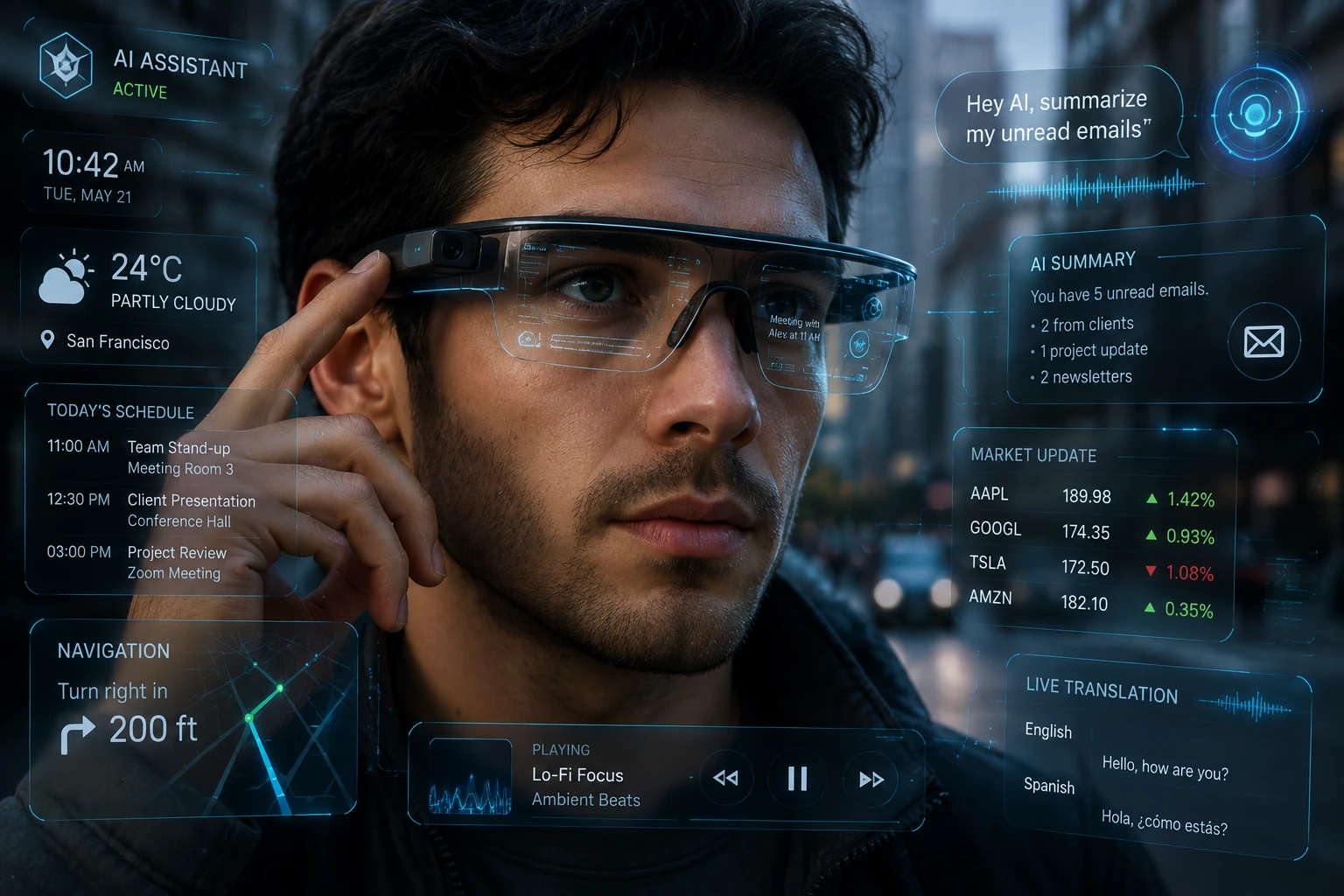
3. The Heads-Up Display (HUD)
In the movies: Tony sees real-time data laid over his vision inside the Iron Man helmet: threat detection, target locking, diagnostics, navigation, all at once.
In real life: This is the category that’s moved the most in just the past year. 2026’s AI smart glasses now overlay live translation, navigation, notifications, and AI-generated answers directly into your field of view, using in-lens micro-LED or waveguide displays. They’re not combat-ready. But the core idea is the same: glanceable data plus a hands-free AI assistant. And it’s now a real consumer category, with genuine competition between Ray-Ban Meta, Google’s Gemini-powered eyewear, and other display-first and audio-first glasses.
Closest real match: AI smart glasses with an in-lens display and voice assistant, like the Ray-Ban Meta (2nd Gen) or Xreal One.
👉 Shop Ray-Ban Meta Smart Glasses · Shop Xreal One AR Glasses — As an Amazon Associate, TechMilkyWay earns from qualifying purchases.
4. Autonomous Design and Engineering
In the movies: JARVIS helps design and stress-test new suits, running simulations and catching flaws before Tony builds anything.
In real life: AI-assisted engineering tools already run simulations, generate design variations, and flag structural issues. This is standard practice now in aerospace and automotive work. What’s still missing is JARVIS’s full autonomy. Real AI tools assist engineers. They don’t independently invent and greenlight a new suit overnight.
Closest real match: AI-assisted design and coding tools like Autodesk Fusion for generative design and simulation, and GitHub Copilot for AI-assisted coding. Both are software subscriptions sold direct from the maker, not something you’d pick up off a shelf.
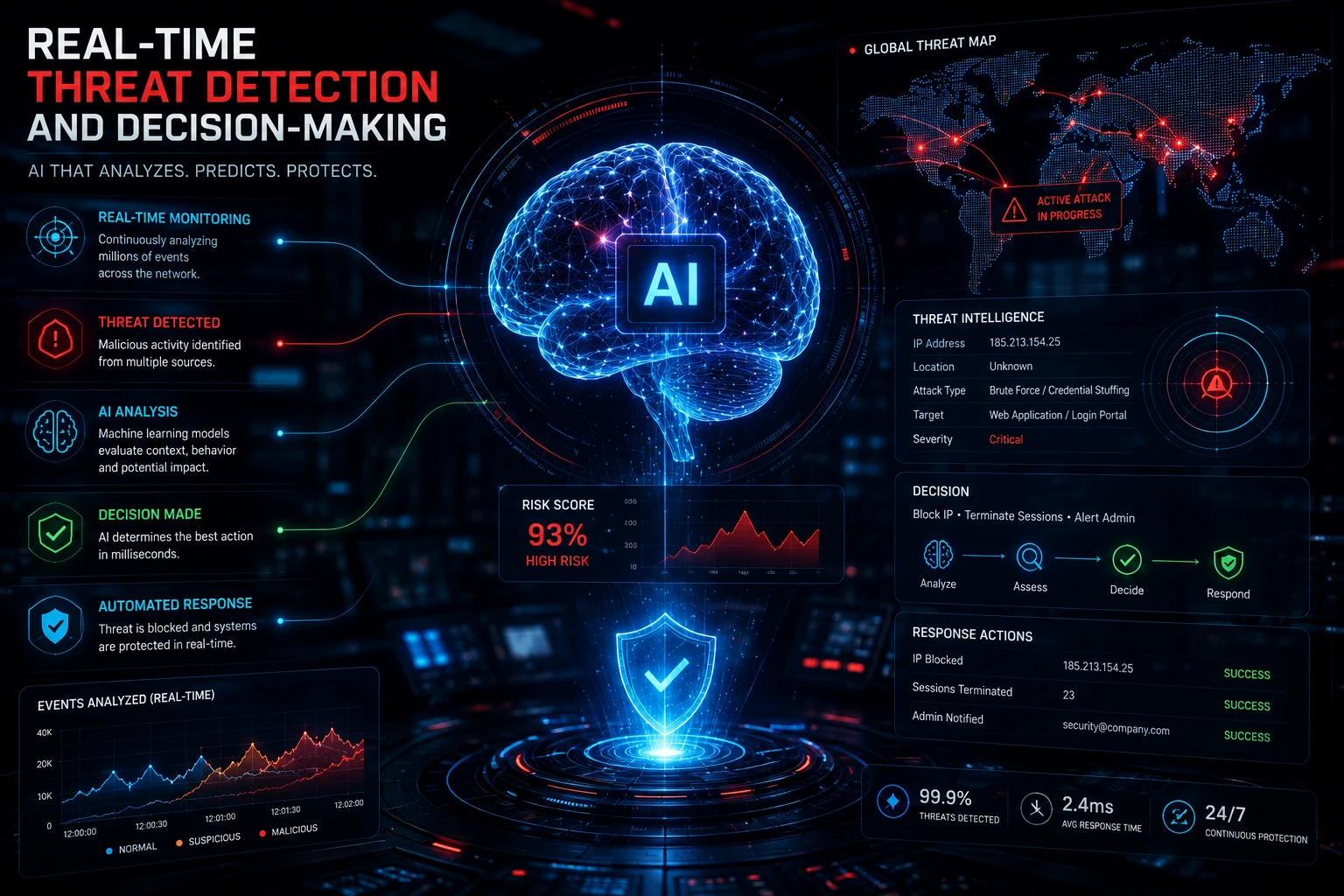
5. Real-Time Threat Detection and Decision-Making
In the movies: JARVIS calculates trajectories, identifies threats, and makes split-second tactical calls mid-fight.
In real life: Computer vision AI already detects objects, tracks motion, and flags anomalies in real time. That’s what powers everything from security cameras to driver-assist systems in cars. The gap is speed and stakes. Today’s systems assist human decisions, or handle low-risk automation like braking. They don’t make autonomous life-or-death calls in combat.
Closest real match: AI-powered security cameras like Ring and Google Nest Cam, which use computer vision for real-time object and anomaly detection.
👉 Shop Ring Security Cameras · Shop Google Nest Cam — As an Amazon Associate, TechMilkyWay earns from qualifying purchases.
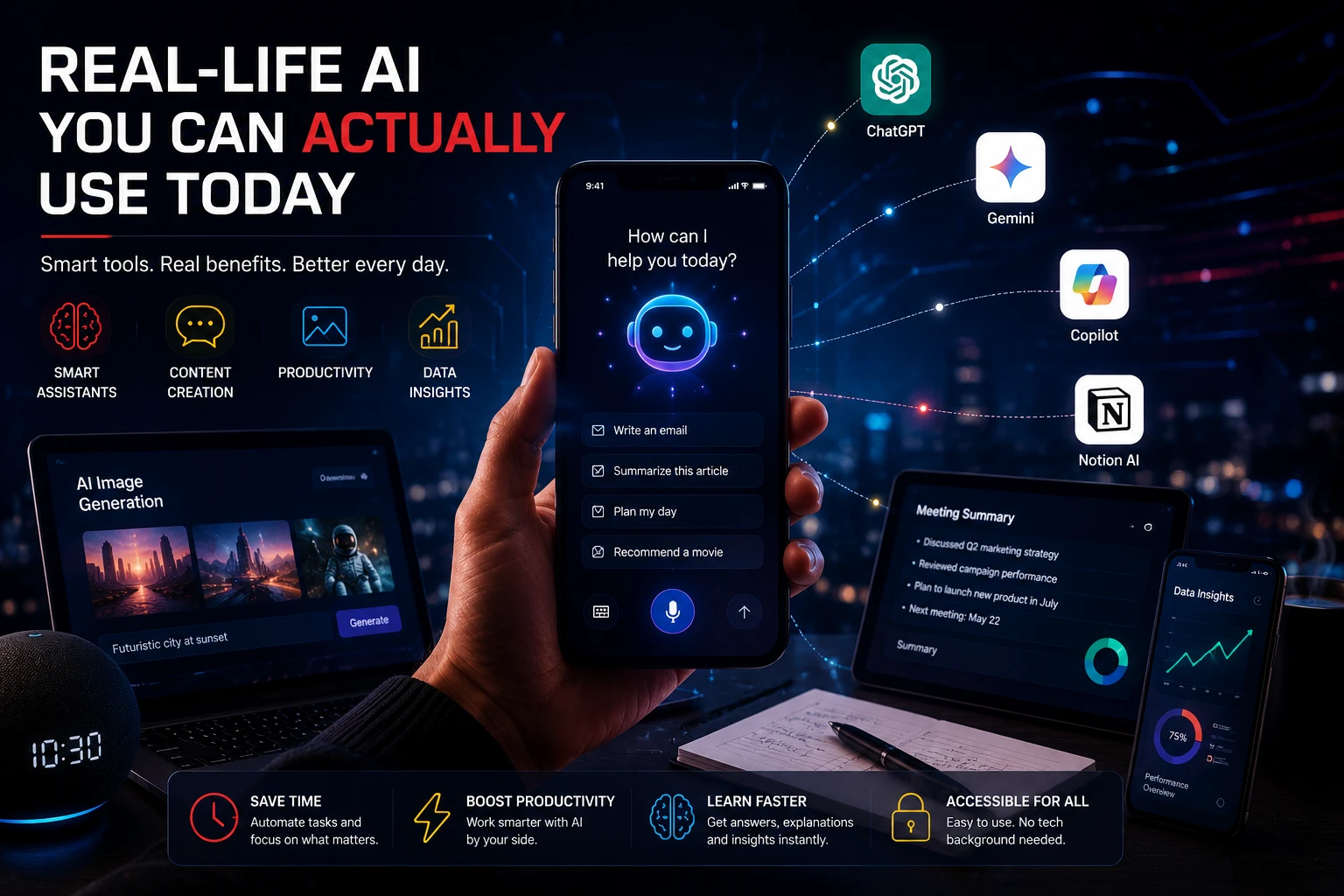
Iron Man AI Vs Real Life AI: What You Can Actually Use Today
JARVIS is fictional, but the Iron Man AI vs real life AI question keeps coming up because plenty of real life AI now covers pieces of what he does. Here’s where to find the closest real-world equivalents:
- General-purpose AI assistants (conversation & reasoning) — Apps like Claude (Anthropic), ChatGPT (OpenAI), and Gemini (Google) hold context-aware conversations, write and debug code, summarize documents, and reason through multi-step problems. That’s close to how Tony talks through problems with JARVIS. Perplexity and Microsoft Copilot cover similar ground, with more of a search and Office-productivity focus.
- Voice assistants (hands-free control) — Siri (Apple), Google Assistant/Gemini (built into Android and Google Home), and Amazon Alexa+ live inside phones, smart speakers, and cars. They handle the “ambient” JARVIS experience: reminders, quick questions, voice control over connected devices.
- Smart home AI hubs — Platforms like Amazon Alexa, Google Home, and Apple HomeKit tie lights, thermostats, locks, and cameras together, with AI layered on top to automate routines around your habits. This is the real version of JARVIS quietly running Tony’s workshop.
- AI smart glasses assistants — Built directly into current-generation smart glasses like Ray-Ban Meta and Even Realities G2. They combine a voice assistant with a HUD-style display for translation, navigation, and quick answers, no phone required.
- AI coding and engineering copilots — Tools like GitHub Copilot, Claude Code, and Cursor help real engineers generate code, catch bugs, and work through design problems. It’s the closest real analog to JARVIS helping Tony prototype in the workshop.
- Computer vision AI — Powers real-time object and anomaly detection in Tesla’s driver-assist systems and AI-enabled home security cameras like Google Nest and Ring. Think of it as the practical, non-combat version of JARVIS’s threat-detection overlays.
Note: most of these AI assistants are free apps available on iOS, Android, and the web. Click through to each official site above for downloads and pricing tiers — many offer free plans alongside paid upgrades.
None of these products are marketed as “a JARVIS.” No single one combines everything the way he does. But stitched together, this is roughly what a real-world JARVIS stack looks like in 2026.
Iron Man AI Vs Real Life AI: How Close Are We?
| JARVIS Capability | Real-World Equivalent | How Close? |
|---|---|---|
| Natural conversation & reasoning | AI assistants / chatbots | 🟢 Very close |
| Smart home control | Smart home + AI automation | 🟢 Already here |
| Heads-up display | AI smart glasses | 🟡 Early but real |
| Autonomous engineering design | AI-assisted CAD/simulation | 🟡 Assists, doesn’t invent |
| Physical embodiment (suit/robot) | Humanoid robots | 🟠 Narrow, supervised use only |
| Autonomous combat decisions | AI computer vision | 🔴 Assistive only, not autonomous |
Here’s the honest takeaway on Iron Man AI vs real life AI: JARVIS’s “brain,” the conversational and reasoning part, is arguably what we’ve come closest to replicating. His “body” is a different story. A fully autonomous AI that builds, wears, and pilots hardware with zero human oversight is still science fiction. Probably will be for a while yet.
FAQ
Iron Man AI vs real life AI — is JARVIS based on real research? JARVIS predates most of today’s AI breakthroughs. The character debuted in 2008, so he wasn’t modeled on any specific real system. Think of him less as a blueprint and more as a lucky guess that turned out partly right.
What’s the closest real product to Tony Stark’s HUD? AI smart glasses with an in-lens display are the closest consumer product you can actually buy. They overlay live information into your field of view and respond to voice commands, the same basic idea as Tony’s helmet display.
Will we ever have a fully autonomous AI like JARVIS? Maybe, eventually. But the exact combination JARVIS represents — deep reasoning, full autonomy, and physical embodiment all at once — hasn’t been pulled off by any single real-world system yet. Each piece exists on its own. Nobody’s fully combined them.
Are humanoid robots like Iron Man’s suits available to buy? Not yet. As of 2026, humanoid robots from companies like Tesla and Figure AI are still being tested in factories and pilot programs. They’re not sold to consumers.
Have another superhero-to-real-tech comparison you want us to break down? Let us know what to cover next.
🌌 TechMilkyWay — Navigating the Universe of Technology.
Quick Links: Home | Blog | Reviews | Apps | Buying Guides | Tech News | Gaming | Gadgets | Deals | How-To Guides | Audio | Contact Us | About Us | Disclaimer | Privacy Policy | Terms & Conditions | DMCA | Facebook | X | Instagram | Tumblr
Disclosure: TechMilkyWay participates in the Amazon Services LLC Associates Program. Purchasing through our links may earn us a small commission at no extra cost to you. We only recommend products we’d buy with our own money. Jervis and Iron man is marvel studios property we only mention here comparison purpose. Read our full Affiliate Disclaimer and Privacy Policy.
© 2026 TechMilkyWay — Navigate The Universe of Technology.