

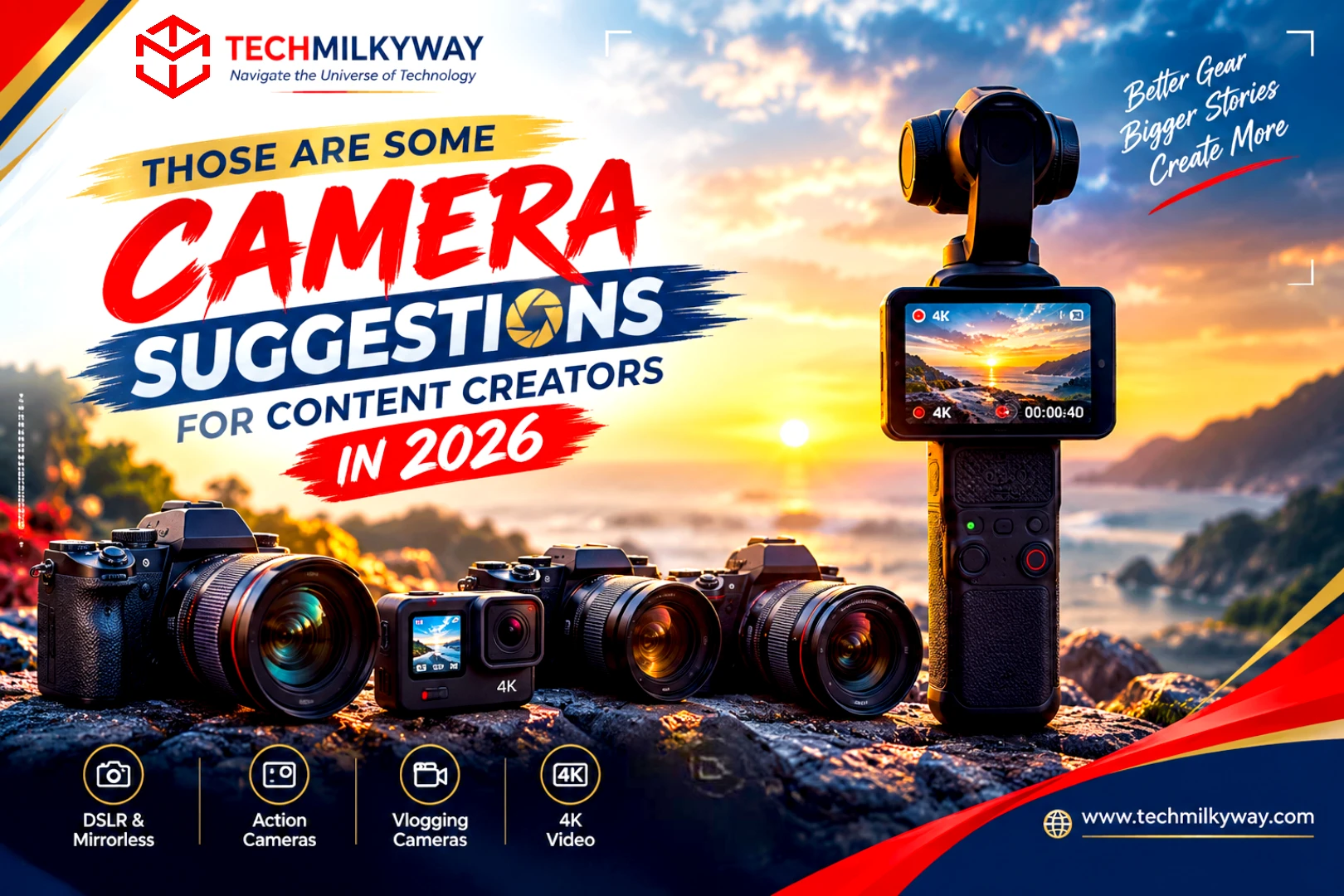
Picking the right camera comes down to matching the gear to how you actually shoot, not chasing the highest spec sheet. These cameras for content creators in 2026 cover ten models across every budget and shooting style, from pocket-size gimbals to full-frame hybrids.
⚡Quick Answer: Most creators will do best with the Canon EOS R50 V, an interchangeable-lens camera built specifically for vlogging, with a flip screen and clean 4K video footage straight out of the box.
For handheld, gimbal-smooth footage that fits in your pocket, compare the DJI Osmo Pocket 4 against the Insta360 Luna Ultra. On a tighter budget, the Sony ZV-1F is the strongest value pick, and it still outperforms a phone. Creators who split their time between photos and video should look at the Fujifilm X-S20, and anyone chasing a cinematic, full-frame look will want the Sony ZV-E1.
Related Articles:
- Those Are Some Best Power Bank in 2026: Top Picks and Buying Guide
- Best Portable SSD for Content Creator in 2026
- DJI Osmo Pocket 4 Review: The Pocket-Sized Powerhouse for Vlog Content Creators
For more device picks, browse our Camera guides.
Content creation in 2026 isn’t just about resolution anymore — it’s about workflow. The creators who grow fastest are the ones who can film, review, and post with the least friction, which has pushed camera makers toward autofocus that just works, audio that doesn’t need a separate mic, and screens that flip toward you instead of away. This guide covers ten models built for real budgets, from a pocket-friendly vlogging camera around $500 to a full-frame creator camera around $2,500.
Price Notes: Pricing will differ across countries/regions based on taxes, shipping expenses, local products, currency exchange rates and retailer costs.
Best Cameras For Content Creators in 2026 – Ranked Summary
| # | Camera | Type | Best For | Price | Score |
|---|---|---|---|---|---|
| 1 | Canon EOS R50 V | Interchangeable-lens | Vlogging & creator-first shooting | $699.99 (body) | 8.7/10 |
| 2 | Sony ZV-E10 II | Interchangeable-lens | Serious YouTube & creator video | $1220 (body) | 9.0/10 |
| 3 | Fujifilm X-S20 | Interchangeable-lens | Hybrid photo + video creators | $1,599 (body) | 8.8/10 |
| 4 | Sony ZV-E1 | Interchangeable-lens (full-frame) | Full-frame creator video | ~$2,598 (body) | 8.9/10 |
| 5 | DJI Osmo Pocket 4 | Pocket gimbal | Travel & stabilized vlogging | ~$ 635 standard combo | 8.7/10 |
| 6 | Insta360 Luna Ultra | Pocket gimbal | Premium dual-lens pocket gimbal | $769.99 | 8.6/10 |
| 7 | GoPro MISSION 1 PRO | Action | Action & cinematic 1-inch video | $699.99 | 8.4/10 |
| 8 | Insta360 X5 | 360° / action | 360° & action content | $549.99 | 8.2/10 |
| 9 | Canon PowerShot V1 | Fixed-lens compact | All-in-one creator camera | ~$1020 | 8.1/10 |
| 10 | Sony ZV-1F | Budget compact | Budget vlogging | $598 | 8.0/10 |
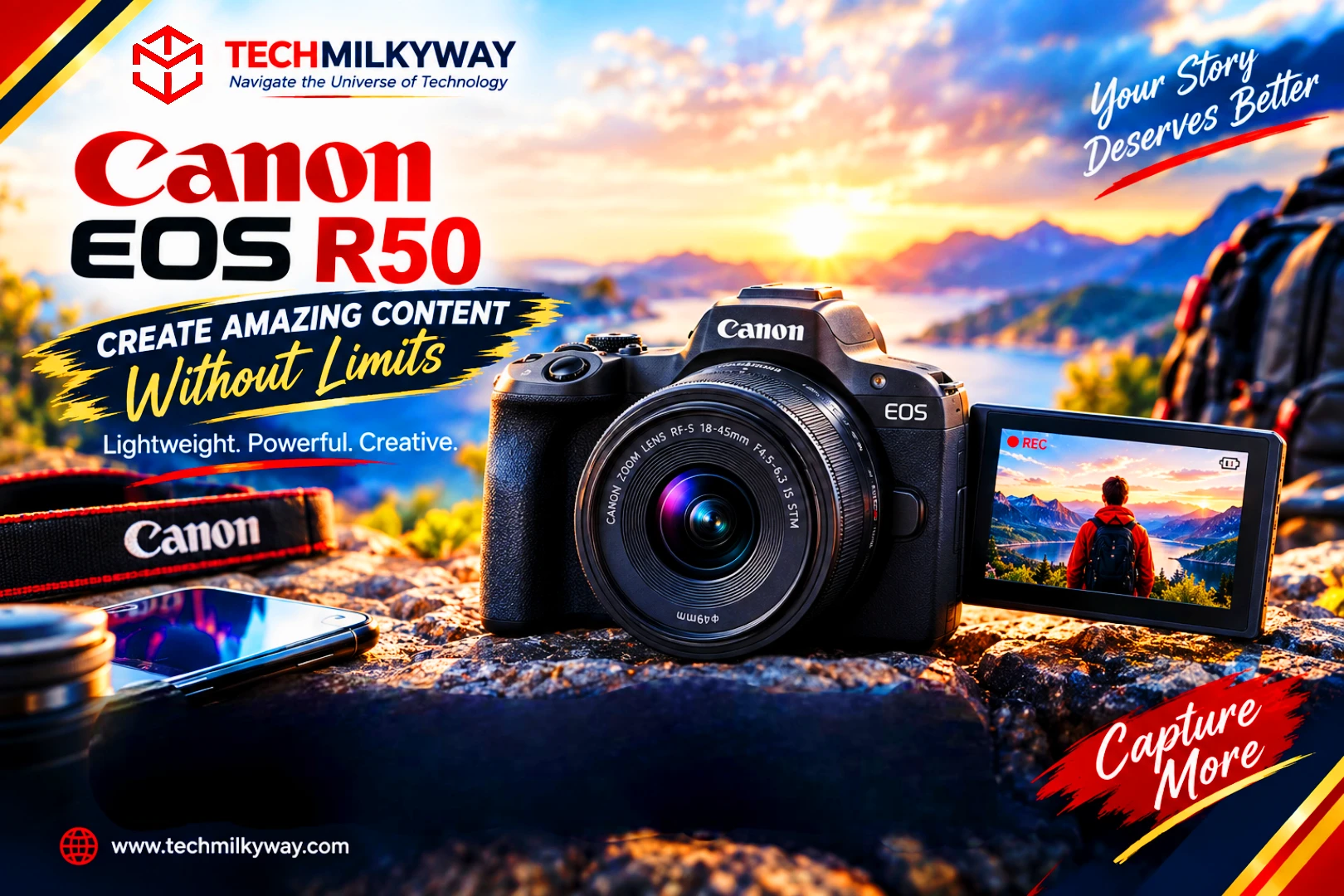
1. Canon EOS R50 V — Vlogging & Creator-First Shooting
| Spec | Detail |
|---|---|
| Sensor | 24.2MP APS-C CMOS |
| Video | 4K up to 60p (1.56x crop above 30p), 10-bit 4:2:2 internal |
| Autofocus | Dual Pixel CMOS AF II, subject tracking |
| Screen | 3″, fully articulating touchscreen |
| Viewfinder | None (video-first body) |
| Weight | 323g (body only) / 370g (with battery & card) |
| Price | $699.95 (body only) / $799 (with RF-S 14-30mm kit lens) |
The R50 V is Canon’s first RF-mount body built from the ground up for vlogging rather than repurposed from a stills camera. It drops the viewfinder entirely and puts everything — the record button, the mic input, the flip screen — where a solo creator filming themselves actually needs it.
Why the Canon EOS R50 V Stands Out
- 10-bit 4:2:2 internal color at $699 — a bit depth most cameras don’t offer until well over $1,000
- No viewfinder, by design — every control is built around filming yourself, not looking through an eyepiece
- Dual Pixel CMOS AF II — the same autofocus family Canon uses in its pro bodies, not a cut-down version
- Interchangeable RF-S lenses — start with the kit lens and grow into primes as your channel grows
✅ Pros
- Purpose-built vlogging ergonomics — no viewfinder to work around
- Reliable subject tracking for solo, walk-and-talk filming
- Interchangeable lenses give room to grow
- USB-C power delivery for all-day streaming setups
❌ Cons
- No viewfinder means it’s not a great pick if you also shoot stills seriously
- 4K above 30fps comes with a notable sensor crop
- Kit lens is soft at the long end
🌌 TechMilkyWay Verdict: 8.7/10 — The clearest “buy this and stop shopping” pick for anyone starting a YouTube or TikTok channel this year.
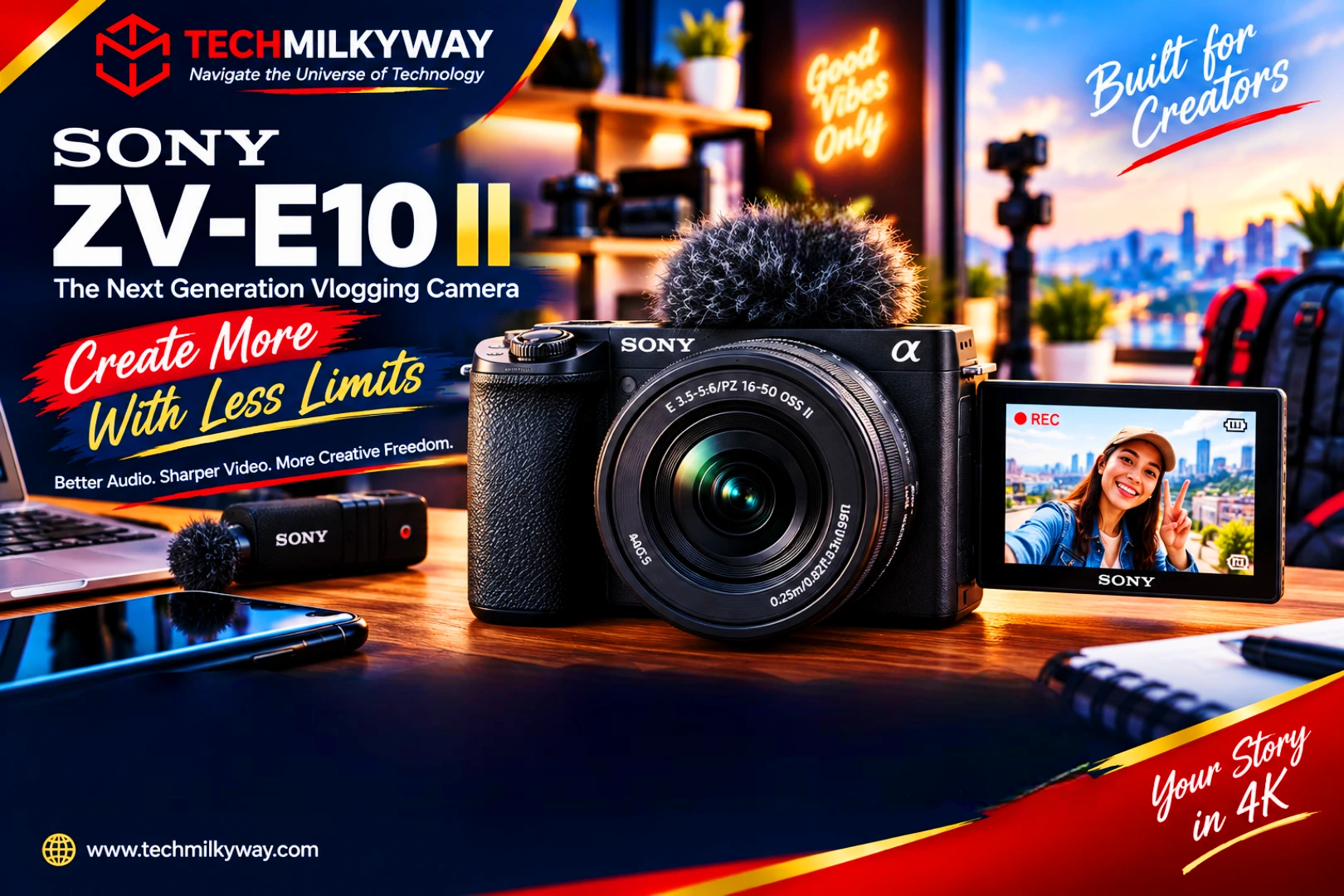
2. Sony ZV-E10 II — Serious YouTube & Creator Video
| Spec | Detail |
|---|---|
| Sensor | 26MP APS-C BSI CMOS (shared with Sony a6700) |
| Video | 4K up to 60p, 5.6K oversampled, 10-bit 4:2:2 |
| Autofocus | 759-point phase detection, real-time Eye AF (human/animal/bird) |
| Screen | 3″, fully articulating touchscreen |
| Battery | Z-series battery, up to ~195 min continuous video |
| Weight | 377g (body) |
| Price | $1220 (body only) / $1,298 (with 16-50mm kit lens) |
The ZV-E10 II is where you land once you’re serious about production value. It inherits its sensor from Sony’s flagship APS-C body, which means cleaner low light, sharper 4K, and proper 10-bit 4:2:2 color for creators who grade their footage.
Why the Sony ZV-E10 II Stands Out
- 26MP sensor shared with the Sony a6700 — flagship APS-C image quality, not an entry-level sensor
- 759-point real-time Eye AF — tracks humans, animals, and birds, a feature set rivals charge far more for the same capability
- 10-bit 4:2:2 color — real grading headroom most creator cameras under $1,000 skip entirely
- Directional 3-capsule mic — usable without an external mic, unlike most cameras in this price range
✅ Pros
- Flagship-grade sensor and autofocus in a creator-friendly body
- 10-bit 4:2:2 color gives real grading flexibility
- Directional 3-capsule mic is genuinely usable without an external mic
- Strong battery life for a body this size
❌ Cons
- Meaningfully more expensive than the R50 V for a similar shooting experience
- No viewfinder, so photography-first creators may prefer the a6700 instead
- 4K/120fps requires downloading a free license file from Sony’s Creators’ Cloud (not a simple firmware update), and applies a larger 1.6x crop
🌌 TechMilkyWay Verdict: 9.0/10 — The best APS-C creator camera Sony has made, and worth the jump up from entry-level once your channel is generating revenue.
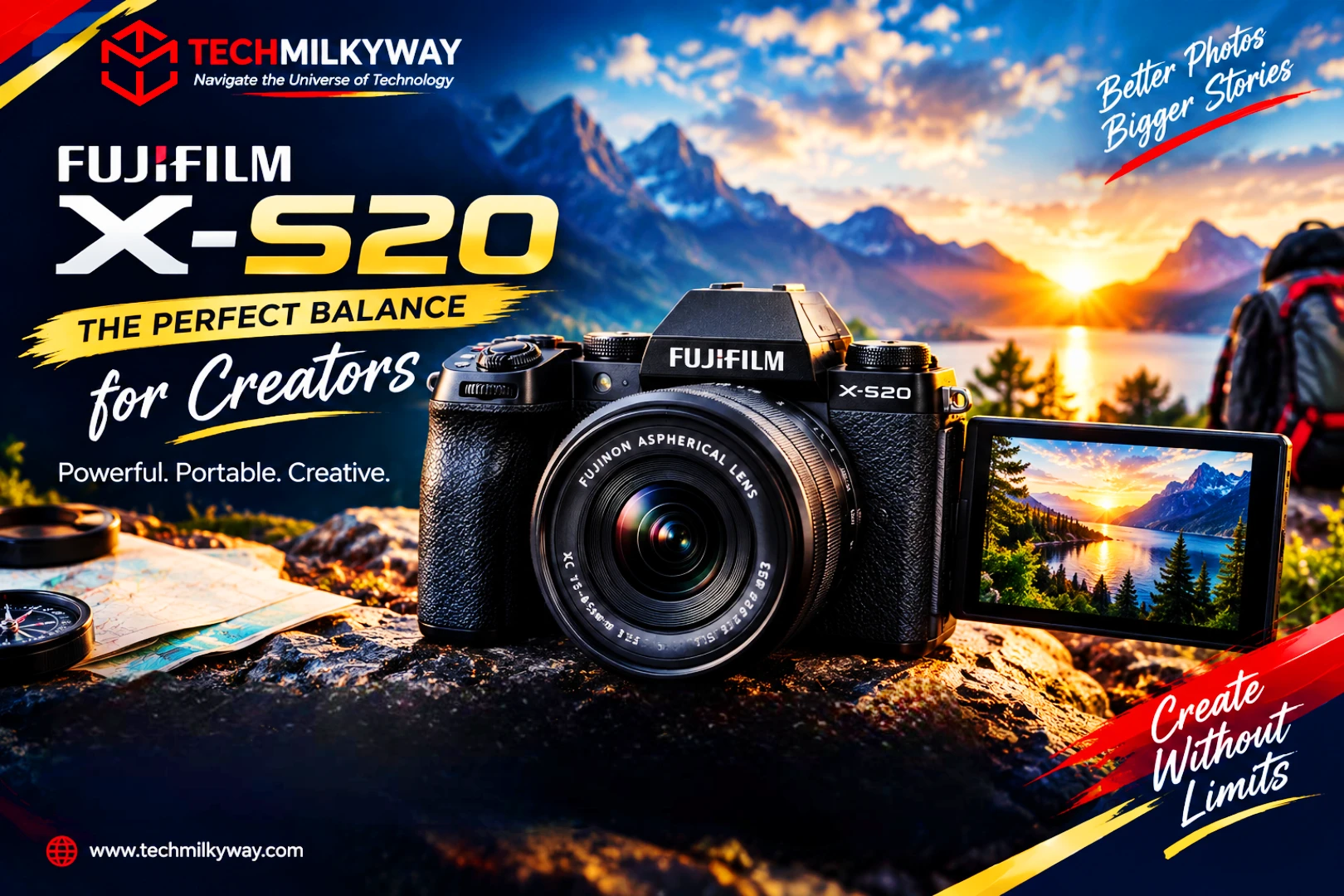
3. Fujifilm X-S20 — Hybrid Photo + Video Creators
| Spec | Detail |
|---|---|
| Sensor | 26.1MP X-Trans CMOS 4 BSI APS-C |
| Video | 6.2K/30p 10-bit 4:2:2, DCI 4K/60p |
| Stabilization | 5-axis IBIS, up to 7 stops |
| Screen | 3″ vari-angle touchscreen |
| Viewfinder | 2.36M-dot OLED EVF |
| Weight | 491g (with battery and card) |
| Price | $1,599 |
The X-S20 is for creators whose content isn’t purely video: product photographers who also shoot reels, or photo-first accounts branching into YouTube. It combines in-body stabilization, a dedicated vlog mode, an electronic viewfinder and Fujifilm’s film simulations in one compact body, with a battery rated for roughly 750–800 shots.
Why the Fujifilm X-S20 Stands Out
- 5-axis IBIS rated to 7 stops — the only camera in this guide with in-body stabilization this strong
- 6.2K/30p 10-bit 4:2:2 video — more cropping flexibility for vertical cuts than any APS-C rival here
- Built-in EVF — a feature every video-first camera on this list skips entirely
- Fujifilm’s film simulations — usable color straight out of camera, cutting down on grading time
✅ Pros
- 5-axis IBIS rated to 7 stops helps handheld footage feel steady
- 6.2K/30p 10-bit video gives cropping flexibility for vertical cuts
- Fujifilm color and film simulations look good straight out of camera
- Includes an EVF, which the video-first cameras in this guide skip
❌ Cons
- Costs about twice as much as the R50 V
- Heavier and bulkier than the video-first vlogging bodies
- Fujifilm’s menu system has a learning curve for newcomers
🌌 TechMilkyWay Verdict: 8.8/10 — The pick for creators who refuse to compromise on photo quality just to get better video.
4. Sony ZV-E1 — Full-Frame Creator Video
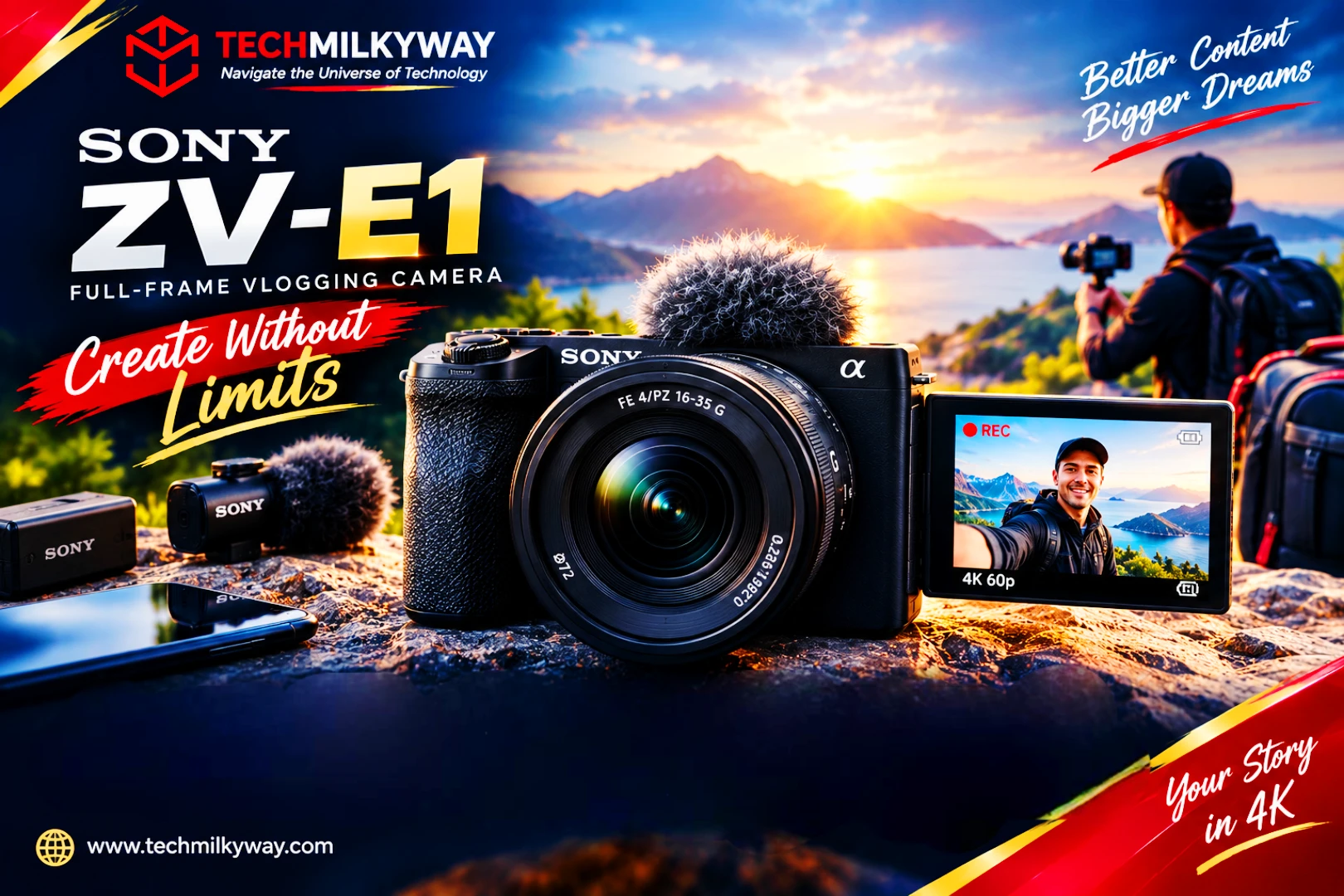
| Spec | Detail |
|---|---|
| Sensor | 12.1MP full-frame Exmor R BSI CMOS |
| Video | 4K up to 60p, 1080p up to 240p, 10-bit 4:2:2, S-Cinetone and S-Log3 |
| Autofocus | 759-point AF with real-time subject recognition |
| Stabilization | IBIS with Active Mode for video |
| Screen | 3″, fully articulating touchscreen (no viewfinder) |
| Weight | 483g (with battery) |
| Price | ~$2,598 body only |
The ZV-E1 puts the 12.1MP full-frame sensor from Sony’s a7S III into a compact vlogging body with AI-assisted framing modes. The low resolution is deliberate: it keeps noise down and low-light footage clean, which suits creators who shoot video first and stills second.
Why the Sony ZV-E1 Stands Out
- 12.1MP full-frame sensor borrowed from the Sony a7S III — built specifically for clean low-light video
- Active Mode stabilization — tuned for handheld walk-and-talk footage, not just static shots
- 10-bit 4:2:2 with S-Cinetone and S-Log3 — professional-grade grading flexibility in a body this size
- Full-frame E-mount compatibility — access to Sony’s entire lens catalog, including compact primes
✅ Pros
- Full-frame low-light performance and shallow depth of field in a compact body
- 10-bit 4:2:2 recording with S-Cinetone and S-Log3 for grading flexibility
- Active Mode stabilization is built for handheld walk-and-talk footage
- Full-frame E-mount lens choice, including compact primes
❌ Cons
- Roughly two and a half times the price of the ZV-E10 II
- 12.1MP is modest if you also need high-resolution stills
- No viewfinder, and video battery life is modest for long shoots
🌌 TechMilkyWay Verdict: 8.9/10 — The pick for creators who want a full-frame look and the best low-light video in a body this small, and can justify the price.
5. DJI Osmo Pocket 4 — Travel & Stabilized Vlogging
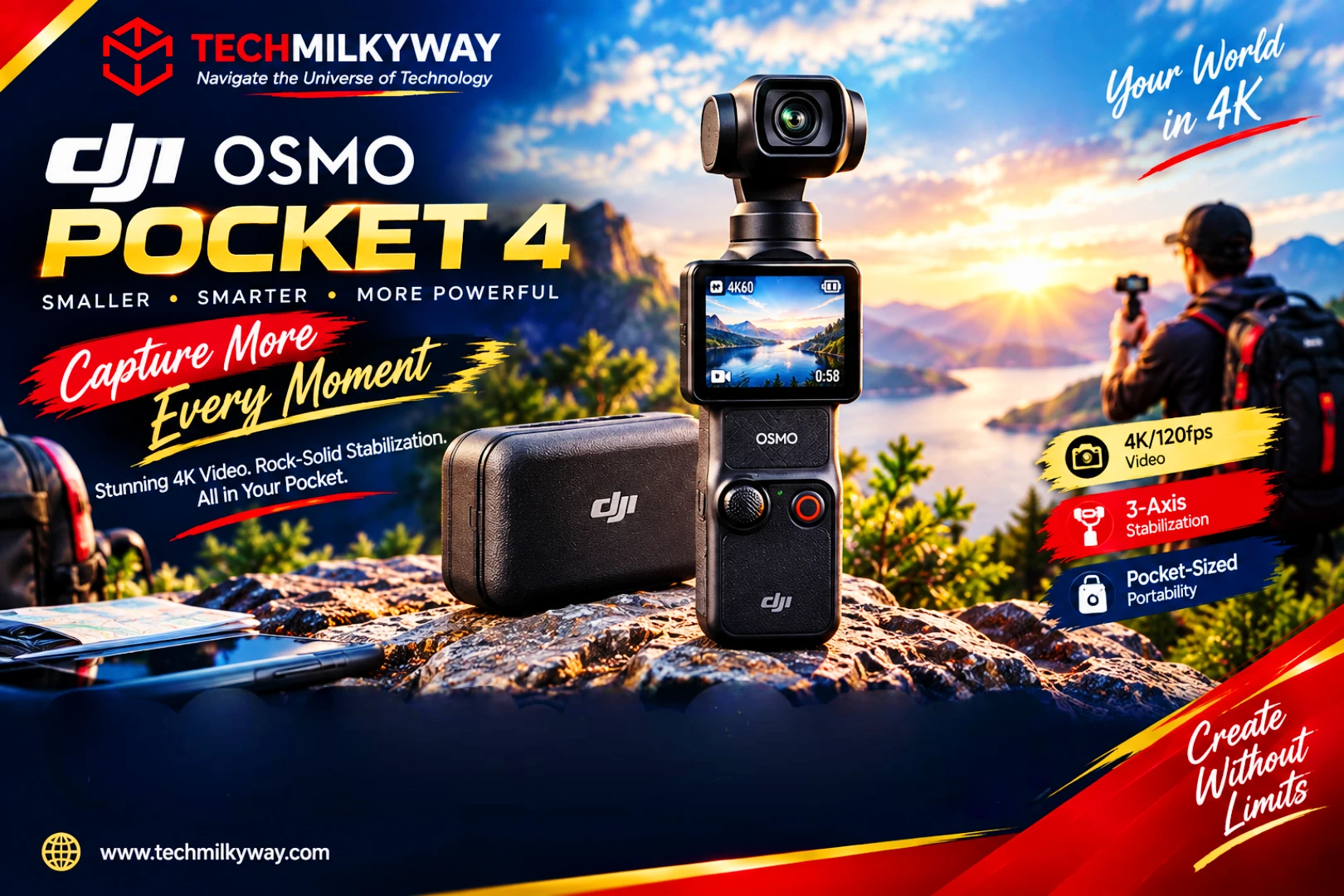
| Spec | Detail |
|---|---|
| Sensor | 1-inch CMOS, f/2.0 aperture |
| Video | 4K up to 240fps slow motion, 10-bit D-Log, 14-stop dynamic range |
| Stabilization | 3-axis mechanical gimbal, ActiveTrack 7.0 |
| Screen | 2″, rotatable OLED touchscreen, 1000 nits |
| Storage | 107GB built-in, up to 800MB/s transfer, microSD up to 1TB |
| Weight | 190.5g |
| Price | $635 Standard Combo, $860 vlog combo |
DJI’s latest single-lens pocket gimbal replaces the Osmo Pocket 3 with a meaningfully upgraded feature set: 14-stop dynamic range, 4K slow motion up to 240fps, a proper 2x lossless zoom, and 107GB of onboard storage. Setup is still zero-effort: pull it out, rotate the screen, and record.
Why the DJI Osmo Pocket 4 Stands Out
- 14-stop dynamic range — a real step up over the Osmo Pocket 3’s already-strong color latitude
- 4K/240fps slow motion — far beyond what most pocket cameras, including phones, can shoot
- 107GB built-in storage — removes the classic “forgot an SD card” problem entirely
- Zero setup required — pull it out, rotate the screen, and the 3-axis gimbal does the rest
✅ Pros
- 14-stop dynamic range and 10-bit D-Log are a real step up for creators who grade footage
- 4K/240fps gives genuine slow-motion flexibility, not just a marketing spec
- 107GB of built-in storage removes the old “forgot an SD card” failure point
- Cheaper than the dual-lens Luna Ultra
❌ Cons
- Fixed lens still limits framing beyond the 2x lossless zoom
- Battery life is modest for long shooting sessions (~240 min rated, less in real-world use)
- Not officially sold in the US, where DJI’s addition to the FCC Covered List has blocked its release — US buyers can only find gray-market imports without DJI’s US warranty
🌌 TechMilkyWay Verdict: 8.7/10 — A genuine generational upgrade over the Pocket 3 and still the easiest way to get professional-looking B-roll and walk-and-talk footage. Read our full DJI Osmo Pocket 4 review for a deeper hands-on breakdown.
6. Insta360 Luna Ultra — Premium Dual-Lens Pocket Gimbal
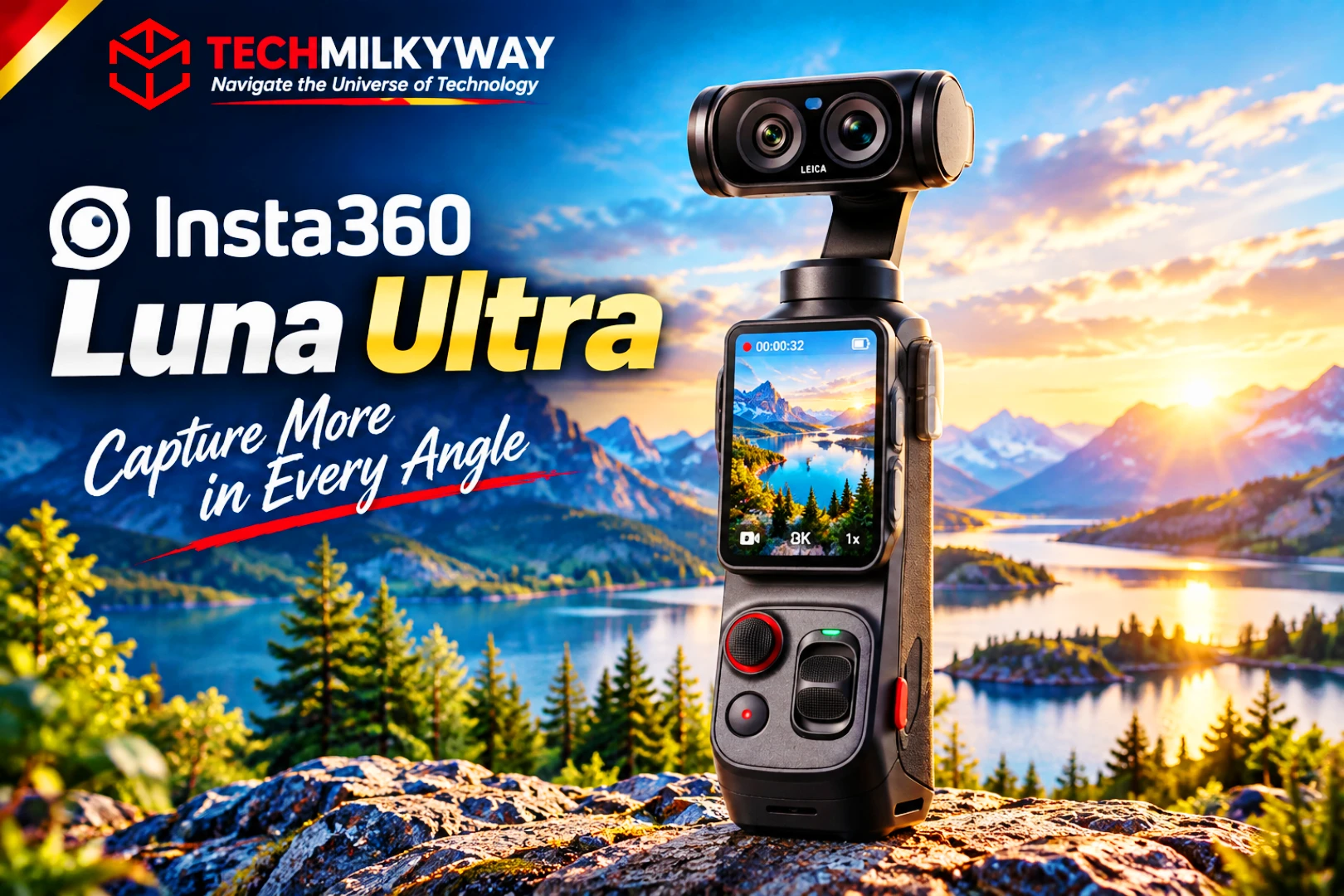
| Spec | Detail |
|---|---|
| Sensors | 1-inch main (Leica Summicron) + 1/1.3-inch telephoto |
| Video | 8K/30p Dolby Vision, 10-bit I-Log, 4K/120fps slow motion |
| Zoom | Up to 12x (6x lossless) |
| Stabilization | 3-axis gimbal |
| Screen | Detachable 2″ OLED, wireless monitoring up to 20m (65ft) |
| Storage | 47GB built-in, microSD up to 1TB |
| Battery | 1550mAh, up to 4 hours, 80% charge in 23 min |
| Weight | ~200g |
| Price | $769.99 (Standard Combo, US) / £649.99 (UK) |
Insta360’s flagship pocket gimbal is the first in this category to go dual-lens: a Leica Summicron main lens paired with a dedicated telephoto sensor, giving solo creators real focal-length range instead of just digital crop. The detachable OLED screen doubles as a wireless monitor up to 65 feet away, which is useful for creators who direct themselves from in front of the camera.
Why the Insta360 Luna Ultra Stands Out
- Dual-lens system with a Leica Summicron main lens — the first pocket gimbal to offer real optical zoom, not digital crop
- Detachable screen doubles as a wireless monitor — works up to 65 feet away from the camera
- 8K Dolby Vision, 10-bit I-Log — color-grading headroom none of DJI’s pocket gimbals currently match
- Fully available through US retail — unlike DJI’s Osmo Pocket 4, with a normal manufacturer warranty
✅ Pros
- Dual-lens system gives real telephoto reach, not just digital zoom
- Detachable screen works as a wireless remote monitor, which Insta360 calls an industry first
- 8K Dolby Vision and 10-bit I-Log give serious color-grading headroom
- Sold through the Insta360 Store and major retailers including Amazon and Best Buy
❌ Cons
- Priciest pocket gimbal on this list
- Dual-lens design adds bulk and complexity versus single-lens pocket cameras
- New to market, so long-term reliability data is still limited
🌌 TechMilkyWay Verdict: 8.6/10 — The most capable pocket gimbal in this guide, and the one to pick if you’re in the US, where DJI’s pocket gimbals aren’t sold.
7. GoPro MISSION 1 PRO — Action & Cinematic 1-Inch Video
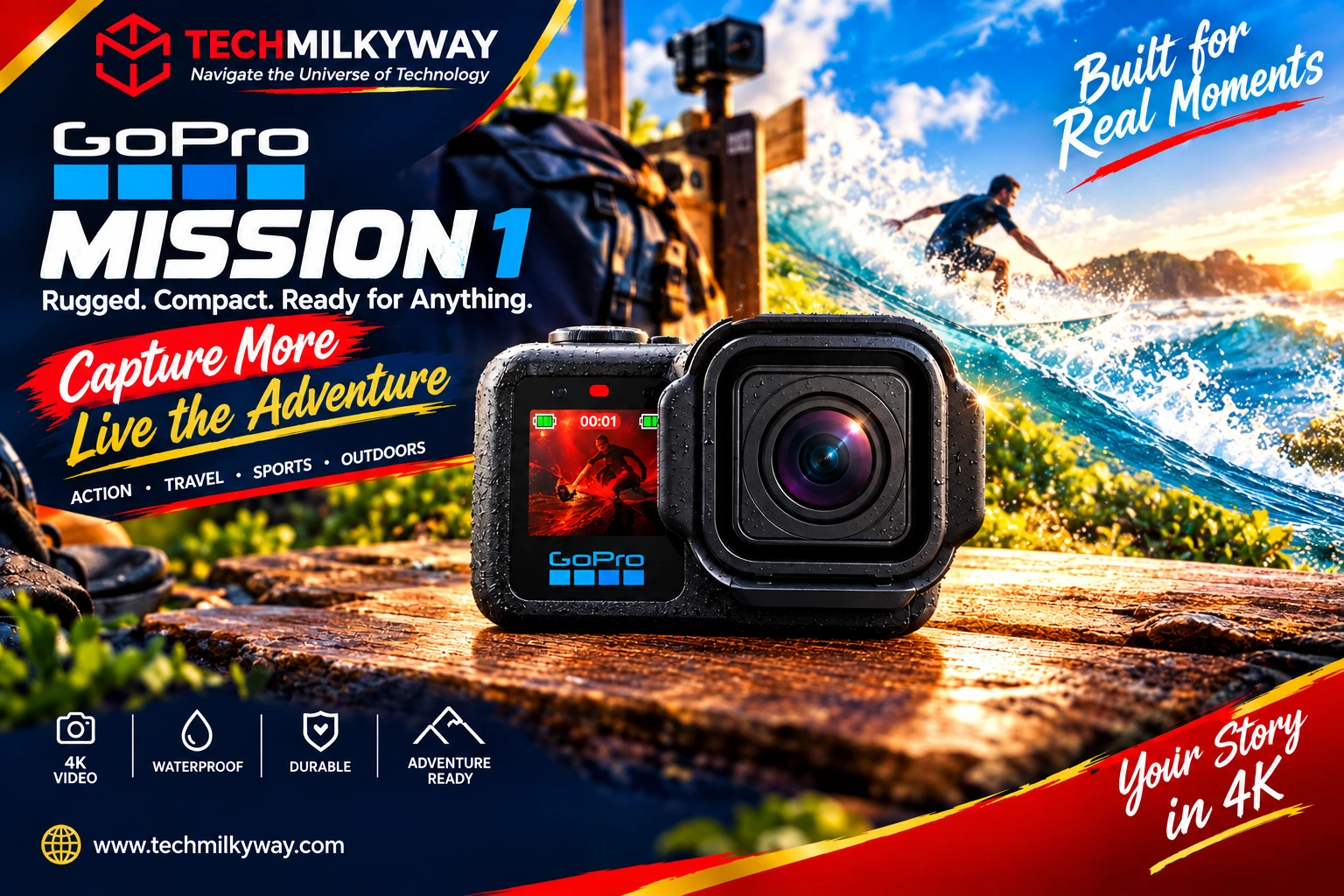
| Spec | Detail |
|---|---|
| Sensor | 50MP 1-inch quad Bayer sensor |
| Video | 8K/60p, 4K/240p, 1080p/960p slow motion; Open Gate 8K/30p and 4K/120p (4:3) |
| Waterproofing | 20m (66ft) without a housing |
| Screen | 2.59″ rear OLED + front display |
| Weight | ~207g |
| Price | $699.99 – $710 MSRP |
As of this writing GoPro hasn’t released a HERO14 Black. It put its next-generation hardware into the new MISSION 1 series instead, which launched on May 28, 2026 with a 50MP 1-inch sensor, roughly four times the sensor area of the HERO13 Black’s. GoPro originally sold a cheaper base MISSION 1 alongside the PRO, but it’s become hard to find at retailers — the PRO is the model to look for now.
Why the GoPro MISSION 1 PRO Stands Out
- 50MP 1-inch sensor — roughly four times the sensor area of the HERO13 Black’s, for a real low-light jump
- 8K/60p and 4K/240p — frame rates and resolution well beyond anything in GoPro’s HERO line
- Open Gate 8K/30p and 4K/120p — extra vertical reframing room built in for TikTok and Reels cuts
- Waterproof to 20m — no separate housing required for most everyday action use
✅ Pros
- 1-inch sensor brings much better low-light performance than earlier GoPros
- 8K/60p and 4K/240p give far more headroom than the HERO line, plus 8K/30p and 4K/120p Open Gate for reframing
- Waterproof to 20m without a housing
- Rugged and compact for action, travel and POV work
❌ Cons
- Heavier and bulkier than the HERO13 Black (about 207g versus 159g)
- $699.99 MSRP is well above the HERO13 Black’s $399 launch price, even with the current promotional pricing
- GoPro’s corporate uncertainty following its 2026 acquisition is worth factoring into a long-term buying decision
🌌 TechMilkyWay Verdict: 8.4/10 — The best-quality GoPro yet on specs, though we’d keep an eye on the company’s direction before calling it a safe long-term bet.
8. Insta360 X5 — 360° & Action Content
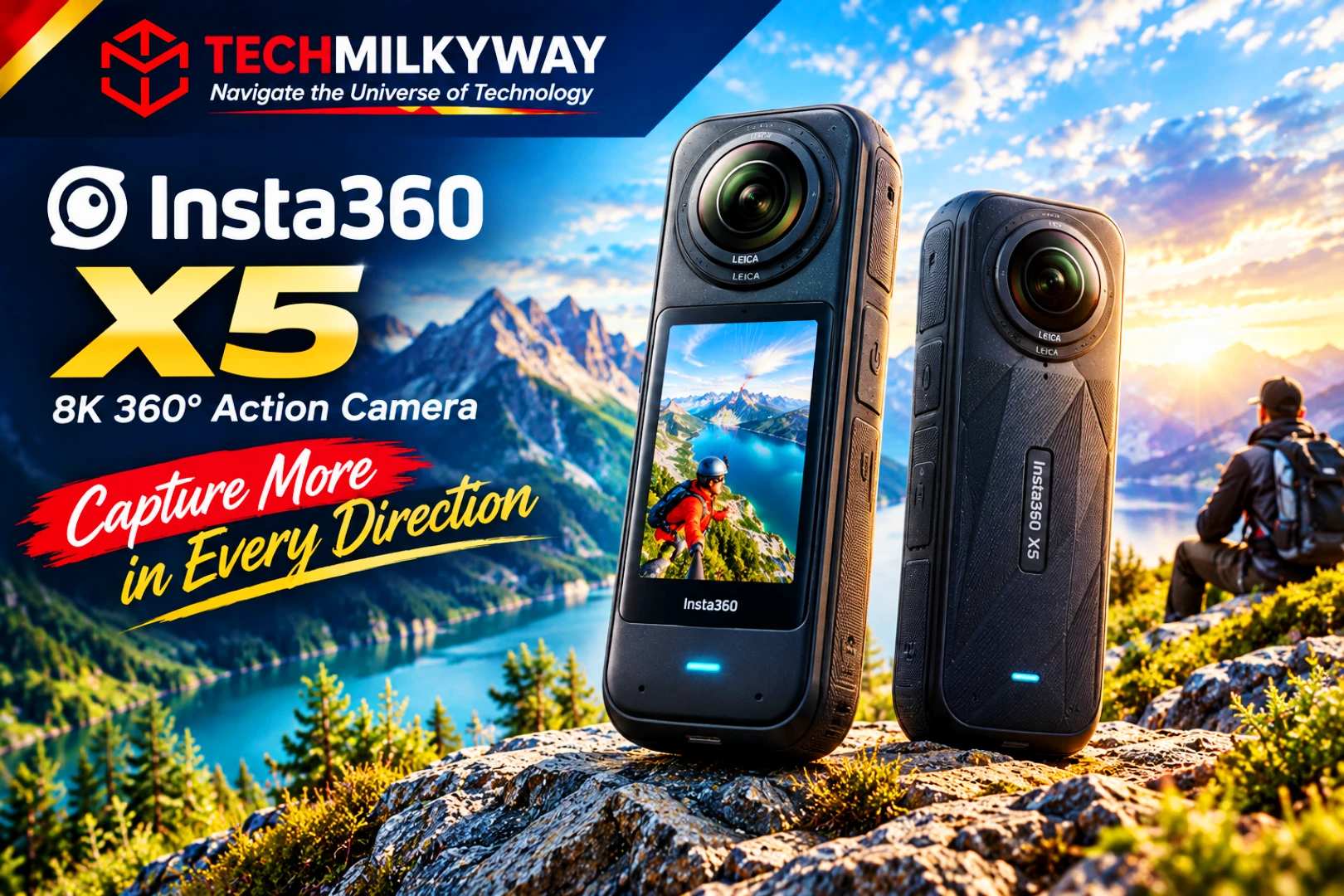
| Spec | Detail |
|---|---|
| Sensor | Dual 1/1.28″ sensors |
| Video | 8K 360° video, 5.7K/60fps Active HDR |
| Waterproofing | Up to 49ft (15m) without a housing |
| Extras | Reframe-after-shooting via companion app |
| Price | $549.99 |
The X5 shoots everything around it and lets you pick the frame afterward, which makes it less a “camera” in the traditional sense and more a capture-everything insurance policy for action, travel, and behind-the-scenes content.
Why the Insta360 X5 Stands Out
- True 360° capture — frame the shot after recording instead of committing to an angle before you hit record
- Dual sensors 144% larger than the X4’s — a meaningful low-light jump over the previous generation
- Waterproof to 49ft (15m) — without needing an additional housing
- AI-assisted reframing in the app — turns a raw 360° clip into an edited shot in a fraction of the time
✅ Pros
- Shoot first, frame later — huge for fast-moving or unpredictable content
- Waterproof without an additional housing
- Strong low-light performance for an action camera
- AI reframing tools speed up editing
❌ Cons
- 360° workflow has a learning curve compared to traditional framing
- App-dependent editing pipeline
- Not a substitute for a primary vlogging camera
🌌 TechMilkyWay Verdict: 8.2/10 — The best choice for creators covering sports, travel, or any content where you can’t predict the shot in advance.
9. Canon PowerShot V1 — All-in-One Creator Camera
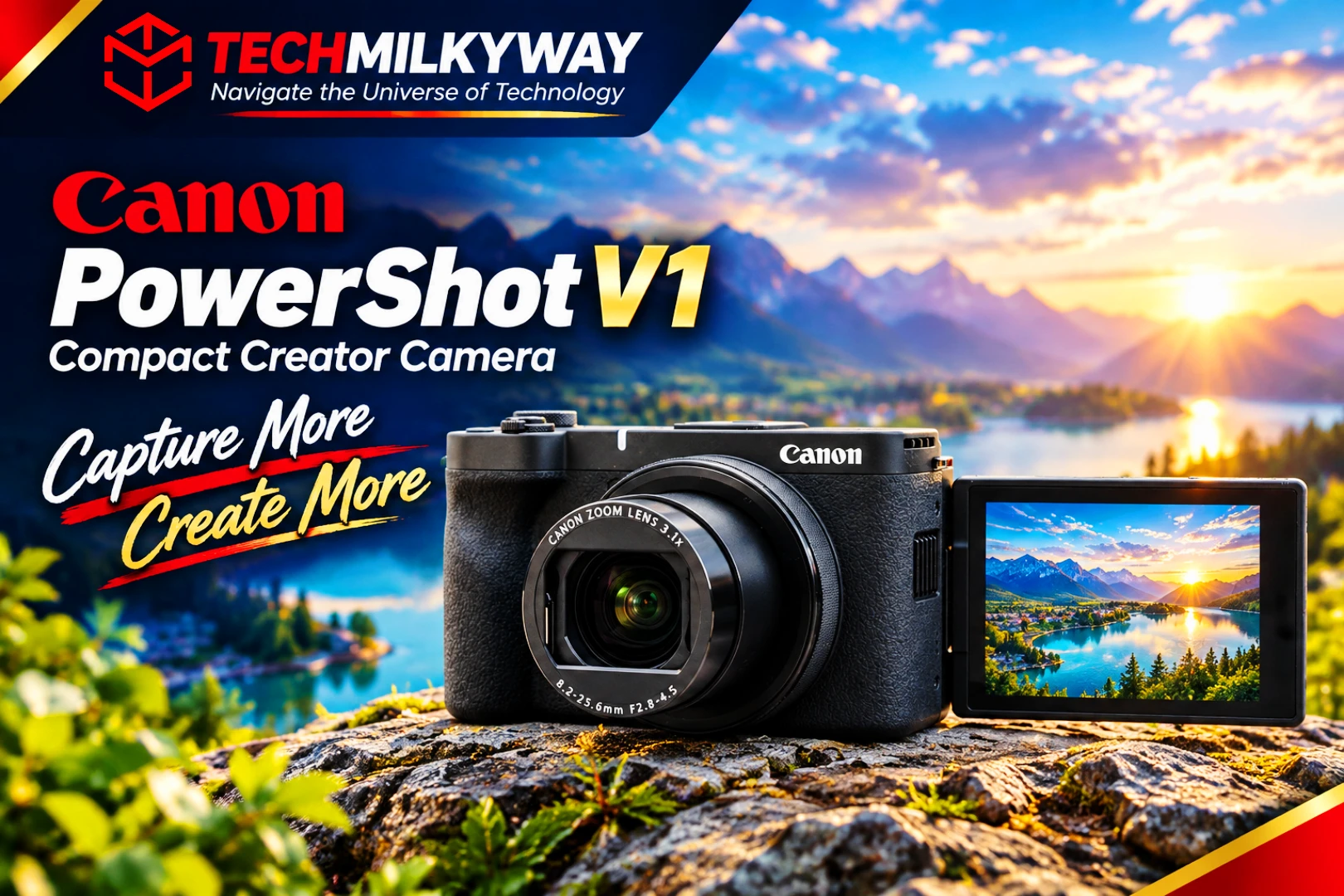
| Spec | Detail |
|---|---|
| Sensor | 22.3MP effective, Type 1.4 CMOS |
| Lens | 16–50mm equivalent (fixed), f/2.8–4.5 |
| Video | 4K up to 60fps (1.4x crop above 30p) |
| Autofocus | Dual Pixel CMOS AF II, human/animal eye detection |
| Screen | 3″ touchscreen |
| Weight | 426g |
| Price | $1020 listed / commonly ~$849 at major retailers |
The PowerShot V1 pairs a larger-than-1-inch Type 1.4 sensor with a fixed 16–50mm equivalent lens, aiming to be a true all-in-one for creators who want stronger image quality than a 1-inch compact without stepping up to an interchangeable-lens system.
Why the Canon PowerShot V1 Stands Out
- Type 1.4 sensor — physically larger than the 1-inch sensors most fixed-lens rivals use at this price
- Dual Pixel CMOS AF II with eye detection — Canon’s interchangeable-lens autofocus tech, in a fixed-lens body
- 16–50mm equivalent zoom — more framing flexibility than most fixed-lens competitors offer
- Genuinely all-in-one — no lenses or accessories needed before you start shooting
✅ Pros
- Larger sensor than most fixed-lens competitors for noticeably better image quality
- Reliable autofocus and strong color straight out of camera
- Genuinely all-in-one — no lens changes, no accessories required to start shooting
❌ Cons
- No built-in flash — requires an external flash unit for fill lighting
- Pricier than an entry-level interchangeable-lens camera like the R50 V
- Limited zoom range and average battery life
🌌 TechMilkyWay Verdict: 8.1/10 — A strong all-rounder for creators who want real image quality in a fixed-lens body, if the price doesn’t put them off.
10. Sony ZV-1F — Budget Vlogging
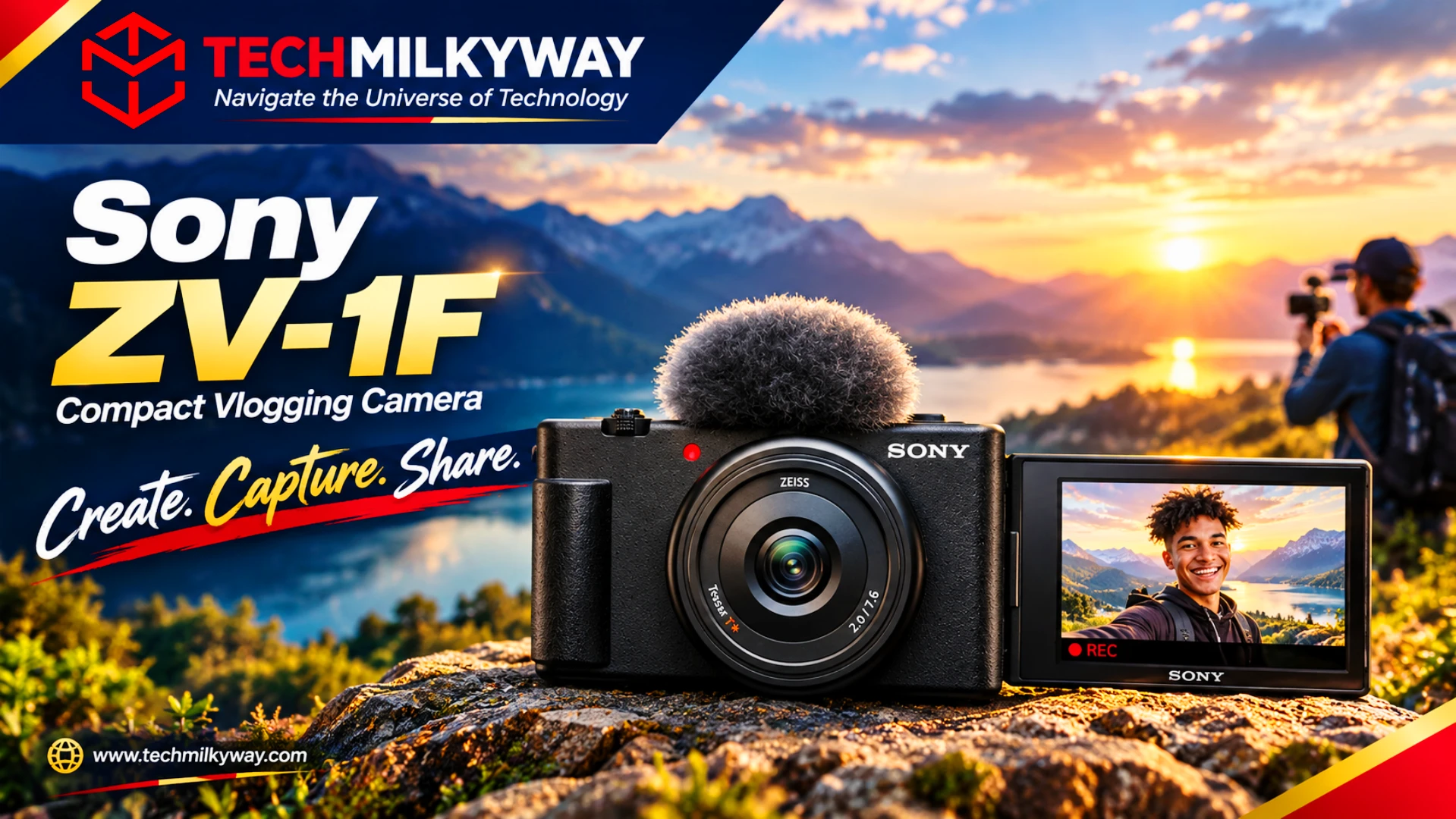
| Spec | Detail |
|---|---|
| Sensor | 20.1MP 1-inch Exmor RS CMOS |
| Lens | Fixed 20mm-equivalent, f/2.0 |
| Video | 4K up to 30p, full sensor width, no crop |
| Autofocus | Contrast-detection AF with Eye AF subject tracking |
| Screen | 3″ vari-angle flip-out touchscreen |
| Extras | Removable NP-BX1 battery, multi-interface accessory shoe, 3.5mm mic port |
| Weight | 255g |
| Price | $598 Body |
The ZV-1F trades a bit of pocketability for a more complete vlogging setup than the cheapest options on this list. Its 1-inch sensor and bright f/2.0 lens punch above its price, Eye AF keeps faces in focus without phase-detection hardware, and a swappable battery means you’re not stuck waiting for a built-in cell to recharge mid-shoot.
Why the Sony ZV-1F Stands Out
- Full vari-angle flip screen — where cheaper rivals settle for a small tilt-up display
- Removable NP-BX1 battery — carry spares instead of waiting for a built-in cell to recharge mid-shoot
- Eye AF subject tracking — reliable face tracking without needing phase-detection hardware
- Multi-interface accessory shoe — add a mic or light without extra adapters or mounts
✅ Pros
- Full vari-angle flip screen, unlike smaller fixed or tilt-up budget cameras
- Removable battery, so you can carry spares for long shoots
- Eye AF reliably tracks faces for solo talking-head content
- Multi-interface shoe adds a mic or light without extra adapters
❌ Cons
- No phase-detection autofocus — relies on contrast-detection, which can “flutter” in trickier scenes
- 4K is capped at 30p, with no higher frame-rate option
- Bulkier and less pocketable than the smallest budget cameras
🌌 TechMilkyWay Verdict: 8.0/10 — The strongest all-around budget pick for creators who want real vlogging ergonomics without spending $800+.
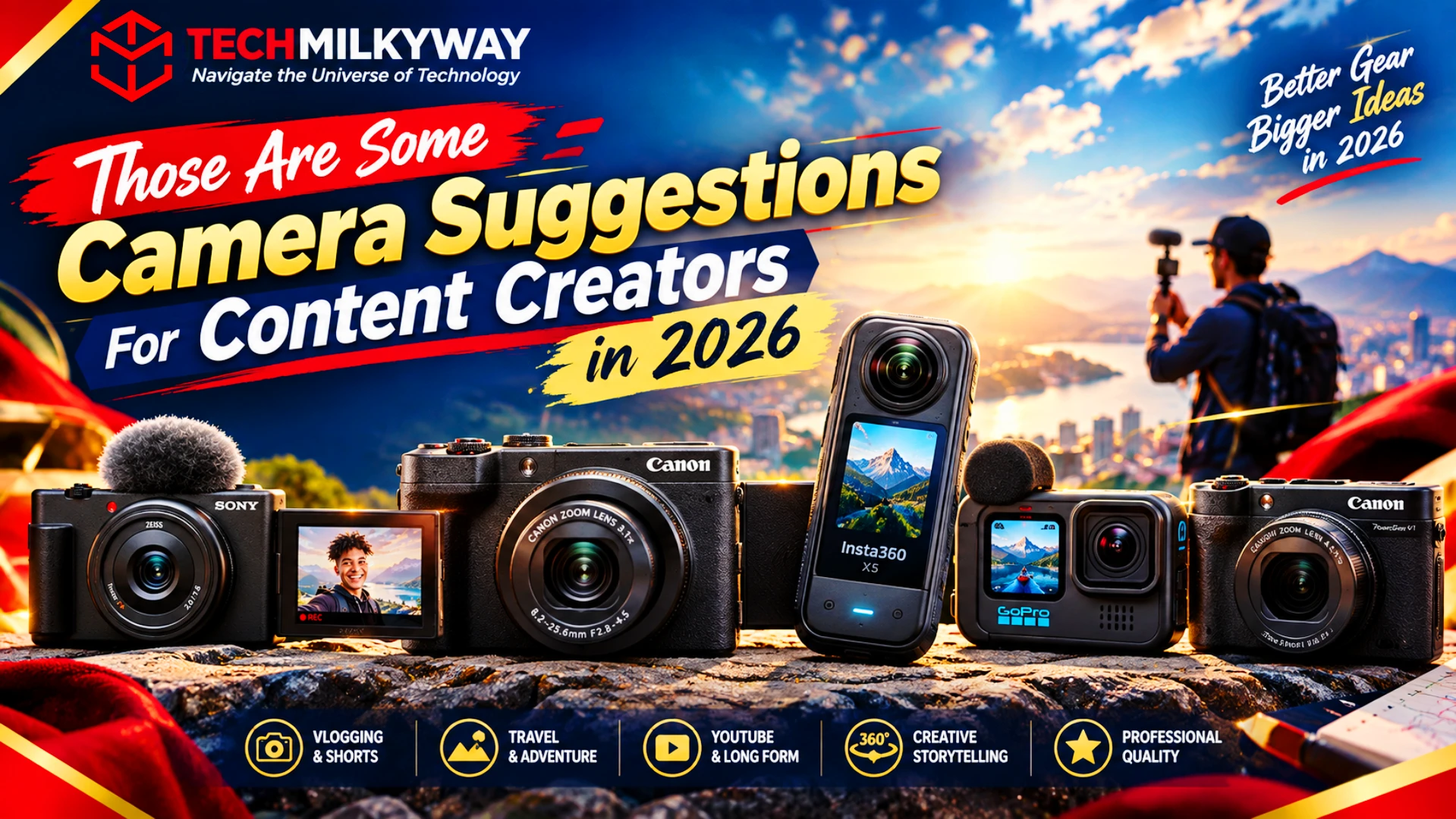
Best Cameras For Content Creators in 2026 – Comparison Table
| Camera | Sensor | Video | Autofocus / Stabilization | Weight | Price |
|---|---|---|---|---|---|
| Canon EOS R50 V | 24.2MP APS-C | 4K/60p (1.56x crop above 30p), 10-bit 4:2:2 | Dual Pixel CMOS AF II | 323g / 370g w/ battery | $699.99 |
| Sony ZV-E10 II | 26MP APS-C BSI | 4K/60p, 5.6K oversampled, 10-bit 4:2:2 | 759-pt phase detection, real-time Eye AF | 377g | $1220 |
| Fujifilm X-S20 | 26.1MP APS-C X-Trans 4 | 6.2K/30p 10-bit 4:2:2, 4K/60p | 5-axis IBIS, up to 7 stops | 491g w/ battery | $1,599 |
| Sony ZV-E1 | 12.1MP full-frame | 4K/60p, 1080p/240p, 10-bit 4:2:2 | IBIS with Active Mode | 483g w/ battery | ~$2,598 |
| DJI Osmo Pocket 4 | 1-inch | 4K/240fps, 10-bit D-Log, 14-stop DR | 3-axis gimbal, ActiveTrack 7.0 | 190.5g | ~$ 635 standard combo |
| Insta360 Luna Ultra | 1-inch + 1/1.3-inch telephoto | 8K/30p Dolby Vision, 10-bit I-Log | 3-axis gimbal | ~200g | $769.99 |
| GoPro MISSION 1 PRO | 50MP 1-inch | 8K/60p, 4K/240p, Open Gate 8K/30p & 4K/120p | Digital/HyperSmooth | ~207g | $699.99 |
| Insta360 X5 | Dual 1/1.28-inch | 8K 360°, 5.7K/60fps Active HDR | Digital, Active HDR | — | $549.99 |
| Canon PowerShot V1 | 22.3MP Type 1.4 | 4K up to 60fps | Dual Pixel CMOS AF II | 426g | ~$1020 |
| Sony ZV-1F | 20.1MP 1-inch | 4K/30p, full sensor width | Contrast-detection, Eye AF | 255g | $598 |
How We Chose the Best Cameras for Content Creators in 2026
We didn’t just pull a list of popular cameras — every pick here had to earn its place against a specific set of criteria that actually matters for content creation. Here’s how we settled on what we consider the best cameras for content creators right now:
- Autofocus that holds up on camera, not just on paper. Subject tracking, Eye AF, and face detection were weighed heavily, since a soft-focus talking-head shot ruins a video faster than any resolution shortfall.
- Workflow, not just specs. Flip screens, built-in mics, one-button recording, and battery design were judged on how much friction they add or remove from filming solo.
- Real-world video quality. We looked past headline resolution numbers to bit depth, color sampling (4:2:0 vs. 4:2:2), dynamic range, and whether footage needs heavy grading to look usable.
- Price-to-capability fit. Each camera had to be the strongest option at its price point and use case — not just a well-known name. That’s why the Sony ZV-1F replaced a more famous budget pick once its ergonomics and autofocus proved stronger in side-by-side comparisons.
- Genuine availability. We checked whether each camera is actually in production and purchasable through normal retail, and we flagged it clearly wherever that wasn’t the case — as with the DJI Osmo Pocket 4’s absence from US retail.
- Company stability and long-term support. Hardware alone doesn’t decide a pick. GoPro’s 2026 acquisition by Starman Optical is a live example of why we also factor in a brand’s direction before calling something a safe long-term investment.
We cross-checked specs, pricing, and availability against official manufacturer pages and multiple independent reviews rather than relying on a single source, and we revisit this guide as new cameras launch or prices shift.
Frequently Asked Questions
Do I need a dedicated camera, or is my phone enough? A modern phone can absolutely start a channel. But once you outgrow it, these camera suggestions for content creators in 2026 are built around the moment that matters most: a dedicated 1-inch or APS-C sensor camera pulls ahead in low light, background blur, and audio flexibility — the areas that most separate “looks professional” content from phone footage.
What matters more for content creation: resolution or autofocus? Autofocus and audio, by a wide margin. 4K is the baseline across nearly every camera on this list; the differentiator is whether the camera can track your face reliably while you move and talk.
Are all of these cameras available worldwide? Most are sold in major markets, but availability and prices vary by country. The main exception is the DJI Osmo Pocket 4, which isn’t sold in the US because of DJI’s FCC Covered List status but is available in most other regions. Check local retailers and warranty coverage before you buy, and treat the dollar prices here as reference points.
Do I need an external microphone with any of these cameras? The Sony ZV-E10 II has a strong built-in directional mic that holds up for most talking-head content. For music, interviews, or noisy environments, an external mic is still worth adding to any camera on this list.
Is a 360° camera like the Insta360 X5 a good first camera? Only if your content style benefits from unpredictable framing — action sports, travel, or fast-moving events. For standard talking-head or tutorial content, a traditional vlogging camera like the R50 V is a simpler starting point.
Final Thoughts
Here’s the honest truth: there’s no single “best” camera for content creation in 2026, just the best one for how you actually shoot. If you’re filming yourself talking, start with the Canon EOS R50 V. Watching your budget? The Sony ZV-1F gives you the most for your money, and the Fujifilm X-S20 is worth the extra spend if you split time between photos and video.
Always on the move? You’ve got two excellent pocket gimbals to choose from in the DJI Osmo Pocket 4 and the Insta360 Luna Ultra, while the GoPro MISSION 1 PRO and Insta360 X5 handle action and 360° footage. And if this is more than a hobby for you, the Sony ZV-E10 II earns its price tag fast, or step up to the Sony ZV-E1 if that full-frame look matters enough to pay for.
Whatever you pick, remember that the camera is the smallest lever in your content’s actual growth — audio quality, lighting, and consistency will move the needle far more than another few megapixels.
For more device picks, browse our Camera guides or our full Buying Guides archive.
Related Articles:
- GaN, PD, and PPS Charging Explained: The Ultimate Fast Charging Guide in 2026
- What is the Best Portable Bluetooth Speaker in 2026?
- Anker Prime 160W vs Anker Charger 140W: Which Should You Buy in 2026?
Quick Links: Home | Blog | News & Reviews | Buying Guides | Gaming | Gadgets & Accessories | Deals | How-To Guides | PCs & Components | Contact Us | About Us | Disclaimer | Privacy Policy | Terms & Conditions | DMCA & Copyright Policy | Facebook | X | Instagram
We didn’t rank these ten cameras by who paid the most — none of them did. TechMilkyWay is part of the Amazon Associates Program, so a few of the links above are affiliate links, and buying through one costs you nothing extra while sending a small commission our way. Full details are in our affiliate disclaimer.
Anker Prime 160W vs Anker Charger 140W: Which Should You Buy in 2026?